What Does an Exercise Physiologist Do? (And When Should You See One?)
An Accredited Exercise Physiologist (AEP) is a university-qualified allied health professional who specialises in prescribing evidence-based exercise to prevent and manage chronic health conditions, injuries, disabilities, and complex medical conditions.
Exercise Physiologists are recognised healthcare professionals accredited by Exercise & Sports Science Australia (ESSA).
An Exercise Physiologist has extensive training in anatomy, physiology, biomechanics, pathology, chronic disease management, and clinical exercise prescription.
Exercise Is Medicine
Most people think of exercise as something that improves fitness or helps with weight loss.
While those are important benefits, exercise is also among the most effective treatments for many chronic health conditions.
Research consistently shows that appropriately prescribed exercise can improve:
Strength
Mobility
Bone health
Cardiovascular health
Blood sugar control
Pain levels
Mental health
Functional independence
Quality of life
This is why Exercise Physiologists often refer to exercise as medicine.
Who Can Benefit From Seeing an Exercise Physiologist?
Exercise Physiology is not just for athletes or gym-goers.
In fact, many clients have never exercised before.
An Exercise Physiologist may help individuals living with:
Chronic Pain
Conditions such as:
Back pain
Neck pain
Arthritis
Fibromyalgia
Persistent musculoskeletal pain
Exercise can help reduce pain sensitivity, improve movement, and increase confidence with daily activities.
Chronic Disease
Exercise plays a significant role in managing:
Type 2 Diabetes
Cardiovascular disease
High blood pressure
Obesity
Chronic respiratory conditions
Osteoporosis and Osteopenia
Strength and weight-bearing exercise can help maintain bone density, improve balance, and reduce fall risk.
Neurological Conditions
Exercise Physiologists frequently work with people living with:
Parkinson's disease
Stroke
Multiple sclerosis
Neurological impairments
Cancer Rehabilitation
Exercise is increasingly recognised as an important part of cancer treatment and recovery.
Injury Rehabilitation
Following injury or surgery, Exercise Physiology can help restore strength, mobility, and function.
What Happens During an Exercise Physiology Assessment?
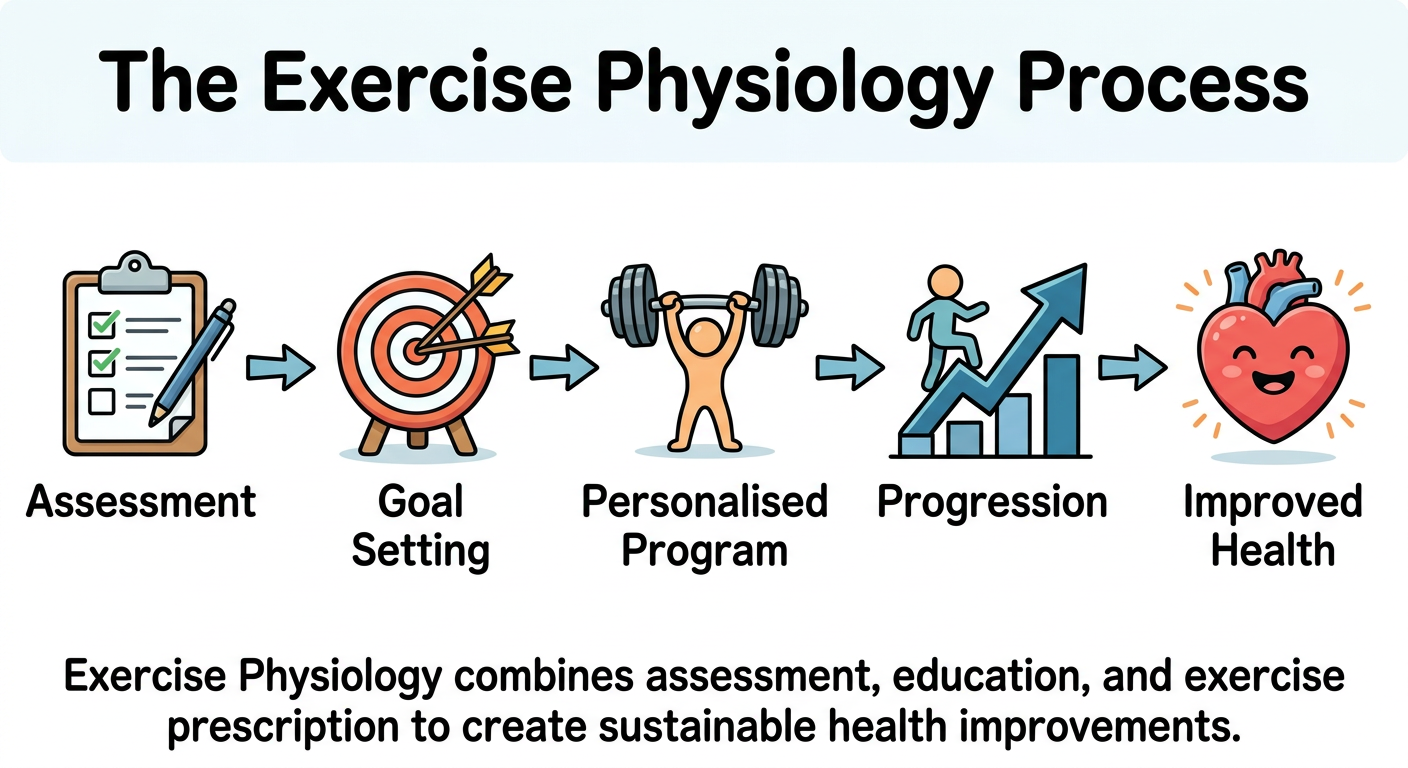
Every client begins with a comprehensive assessment.
This typically includes:
Medical history review
Discussion of goals
Strength assessment
Mobility assessment
Balance testing
Functional movement assessment
Review of lifestyle factors
The purpose is to understand not only your condition but also what matters most to you.
What Does Treatment Look Like?
There is no one-size-fits-all approach.
An Exercise Physiologist develops a personalised exercise plan based on:
Medical history
Current abilities
Symptoms
Goals
Preferences
Treatment may include:
Strength training
Mobility exercises
Balance training
Cardiovascular exercise
Functional movement training
Education around pain and health
The program is progressed gradually and safely.
When Should You See an Exercise Physiologist?
Many people wait until symptoms become severe before seeking help.
In reality, earlier intervention is often better.
You may benefit from seeing an Exercise Physiologist if you:
Have ongoing pain
Have been diagnosed with a chronic condition
Want to improve strength and mobility
Have experienced a fall
Have osteoporosis or osteopenia
Need help managing diabetes
Are recovering from injury or surgery
Feel unsure about how to exercise safely
Want to improve your overall health
You don't need to be fit before seeing an Exercise Physiologist—that's what we're here for.
The Bottom Line
Exercise Physiology is about far more than exercise.
It's about using evidence-based movement to improve health, manage disease, reduce pain, restore function, and help people live fuller, more independent lives.
Whether you're managing a chronic condition, recovering from an injury, or simply seeking to improve your health, an Exercise Physiologist can provide the guidance and support you need to achieve your goals safely and effectively.
If you're unsure whether Exercise Physiology is right for you, we'd love to help.
At The Right Move Allied Health Centre, we work with people of all ages and abilities to improve strength, mobility, confidence, and overall health through personalised exercise programs.
Book an assessment today and discover how exercise can become one of the most powerful tools in your healthcare journey.